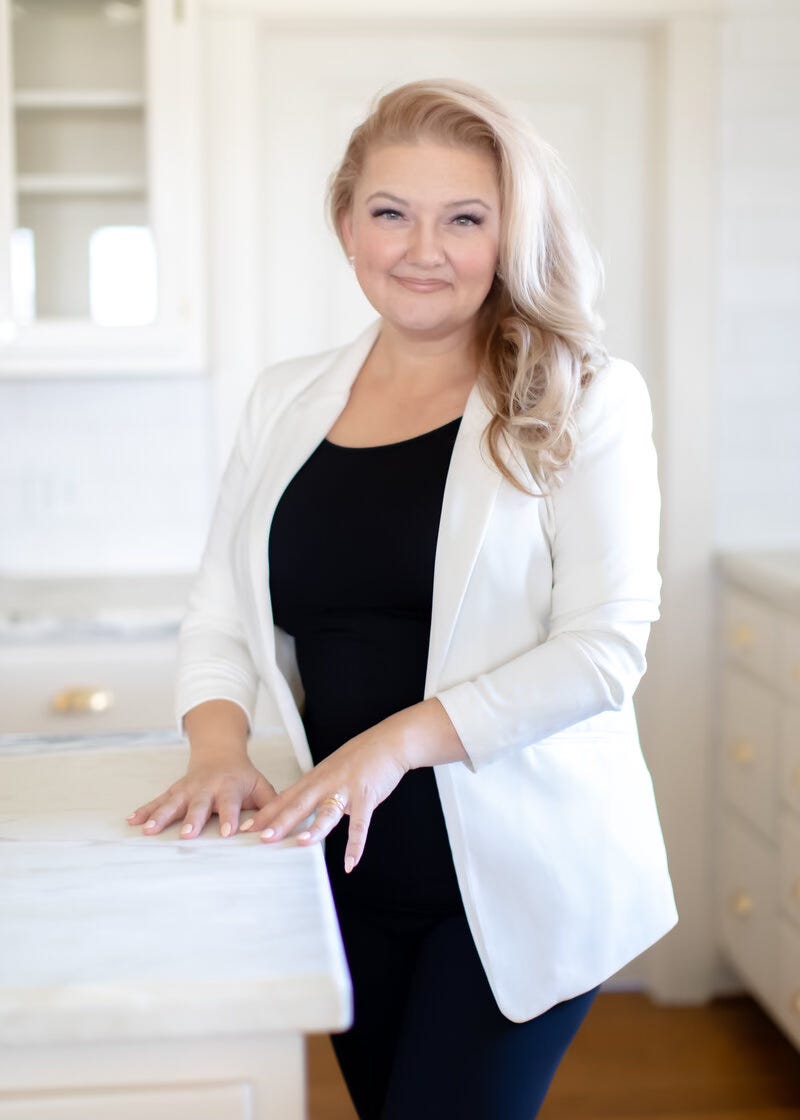
Chef Tiffany Poe, CEC, CHE
...on the intersections of cooking, education and AI.
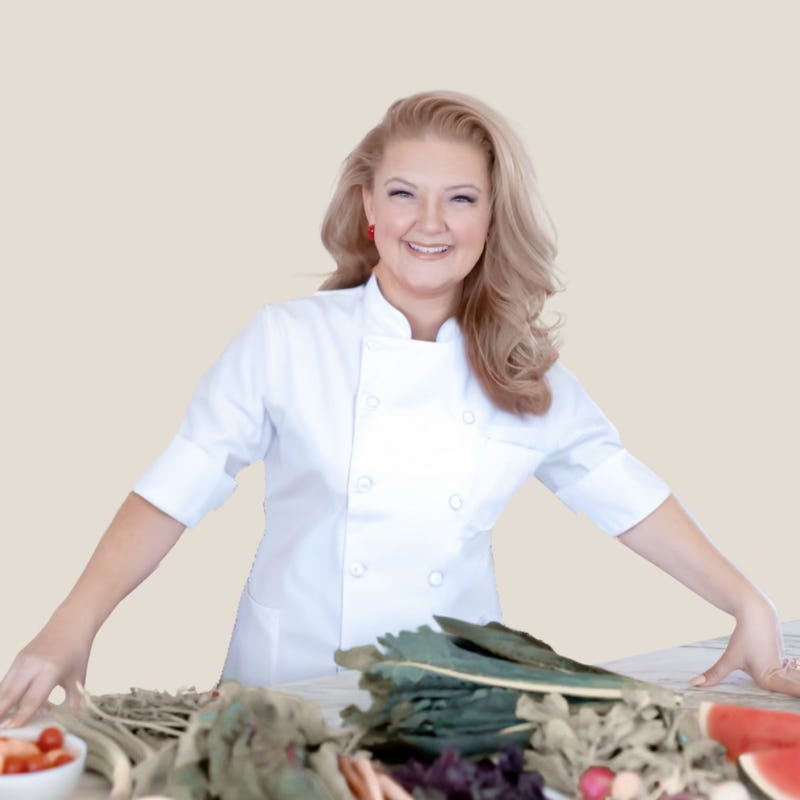
I first met Chef Tiffany while as editor of the American Culinary Federation’s National Culinary Reviewmagazine. She is a chef, educator, and AI consultant with two decades of experience spanning culinary education, food media, and operations. In addition to running her own business, Tiffany Poe Consulting, she is an adjunct professor at the Culinary Institute of America, where she explores the intersection of creativity, technology, and learning. Chef Tiffany previously led culinary programs at Oklahoma State University and worked with Ree Drummond (aka, The Pioneer Woman) on Food Network projects in the state where she grew up. Chef Tiffany literally lights up a room when she walks into it—in addition to being amazingly talented, she’s also mom to seven, yes seven kiddos. She amazes me! Learn more about here (and below).
AL: I would describe you as a bit of a unicorn in the culinary world—bringing together food, education, and technology. Can you give a quick rundown of your background and how you got into AI?
TP: I always tell people I’ve had a Forest Gump career. I did not intend to be where I am in any way, shape, or form. It’s been a weird journey. I actually started out wanting to be a scientist—a medical doctor or research scientist. I was a total nerd in high school, did competitive science projects, and enrolled as a pre-med major right out of high school. I needed a job, though, and got into a restaurant kind of by accident. I wanted to be a server, but the chef—this scary New York chef with the accent, the earrings, all of it—threw me in the back of the restaurant instead. I was completely intimidated. But after three hours, I was like, “Oh my gosh, can I come back tomorrow?” It was like a drug.
AL: What was it about the kitchen that hooked you so fast?
TP: The longer I steeped in it, the more I fell in love with it. I loved the cooking—the fire, the action—but I really loved the conversation that food allowed me to have with other people and other topics. The thrill of the kitchen and the operations felt like a stage for all these other things in life. Something kind of woke up in my brain. I started seeing things five-dimensionally. Most chefs are ADHD anyway—snap, crackle, pop, what’s happening? We absorb everything at once. This industry attracts people like that because it gives you instant gratification, and then you get to sort it all out in your head.
AL: Education has been a huge part of your career. How did that shape what you do now?
TP: I fell in love with education. I became even more of a nerd. I got a degree in adult education and spent about 20 years teaching and training people. Over my career, I trained about 10,000 students. That experience really primed me for what I do now with AI. You’re essentially training a ton of little students—except they’re not people. You’re training models. And I’m doing it with my mouth, with the English language. Understanding pedagogy and how people learn translates directly into how you train AI to get certain outcomes.
AL: You’ve talked openly about a period of burnout after losing your job as a result of the Covid-19 pandemic. What did that moment look like for you?
TP: I was mentally fried. I was bored. My creativity bottomed out. I had never lost a job in 25 years, so even though it wasn’t my fault, it felt incredibly personal. It was mentally and emotionally devastating. I felt like the Dead Sea—there was inlet but no outlet. I had all this experience and passion, but nowhere to put it.
AL: And that’s when AI entered the picture?
TP: Yeah. I was sitting on the couch one night with my kids and thought, “I’ve been hearing about this AI thing—how smart can it really be?” I was super skeptical.
But within eight hours of downloading the app, I had written two books I’d always wanted to write. I had three business ideas and probably 25 ideations. It was two in the morning, everyone was asleep, and I was still going. For the first time in my life, I thought, “Oh my gosh, I finally met something that can keep up with my crazy brain.” It felt like the assistant I’d always needed—something that could keep up with a thousand thoughts and help me turn them into an action plan.
AL: You mentioned working with the Culinary Institute of America and other schools. What does that work actually look like when it comes to AI and culinary education?
TP: A lot of what I do is working with organizations and institutions that want to implement AI intelligently, intuitively and intentionally. It’s not like you just buy everybody an OpenAI enterprise version and say, “Okay, let’s go. Let’s use AI. It’s fun.” There needs to be a real plan behind it. There’s a psychology to the usage, the interaction and the implementation of it. That’s where I come in. Training so many students over the years really primed me intellectually to help train AI models and large language models, and to help organizations understand how the data annotation and learning process actually works inside their own accounts and enterprise systems.
AL: How do you explain AI learning to chefs and educators who may not come from a tech background?
TP: I explain it the same way I explain teaching students. You’re essentially training a ton of little students. They’re not people, but they’re these little micro-brains that you want to execute exactly what you want them to do. When you’ve trained students for 20 years and had to speak to them a certain way to get a certain outcome, and when you understand educational psychology and pedagogy, it translates really well. You’re doing the same thing a coder or data analyst does — I’m just doing it with language.
AL: Everyone’s afraid of AI taking their jobs. Do you see AI replacing traditional culinary instruction?
TP: No, not at all. It’s a support system. It’s a tool. Just like any other tool we’ve introduced into kitchens over time, it’s about how you use it. AI doesn’t replace technique, intuition or experience — it helps accelerate learning and deepen understanding if it’s used correctly. What excites me is that it helps people get unstuck creatively. I’ve seen chefs, educators and even people who were close to retirement suddenly feel creatively alive again. AI has a way of awakening curiosity and confidence — and that’s incredibly powerful in an educational setting.
AL: What does “cook like a chef” mean to you?
TP: It’s cooking with confidence and authority. You approach food differently. You don’t have to be a chef to cook like one—your grandma cooked with authority. She wrestled that recipe down because her family was depending on it. It’s also about understanding that what you put into food is what you get out. I will not cook without a good salt. That’s my non-negotiable.
AL: I know you’re famously opinionated about salt.
TP: I’m a Maldon girl. Iodized salt is like dropping a rock on your food Maldon is like dropping a snowflake. The crystal is pyramid-shaped, like a snowflake—it’s beautiful.
I use Maldon more for finishing, but Morton’s kosher salt is utilitarian—fine for pasta water. My kids know not to touch mommy’s Maldon salt.
Read more Q&As with my chef friends!